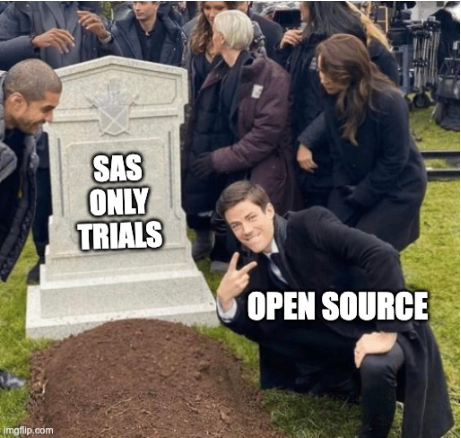
Open Source and the FDA

Brian Repko

Introduction

  • 8 years in oncology research
  • 5 years in an internal CRO (-omic biomarkers)
    • including validation and qualification

  • Minneapolis-St Paul “city captain” for Bits-in-Bio
  • R/Pharma and {pharmaverse} contributor

  • This talk will have more drugs / biologics focus than devices
  • This talk will have more R information than Python

Getting to know the FDA

Organization / Submissions

  • Top-level organization within Health and Human Services
  • Sub-organizations
    • Center for Drug Evaluation and Research (CDER) → drugs (and some biologics)
    • Center for Biologics Evaluation and Research (CBER) → biologics (and some devices)
    • Center for Devices and Radiological Health (CDRH) → devices (and therapeutic apps)
  • Submission Types
    • Device submissions based on risk - Class I / II / III
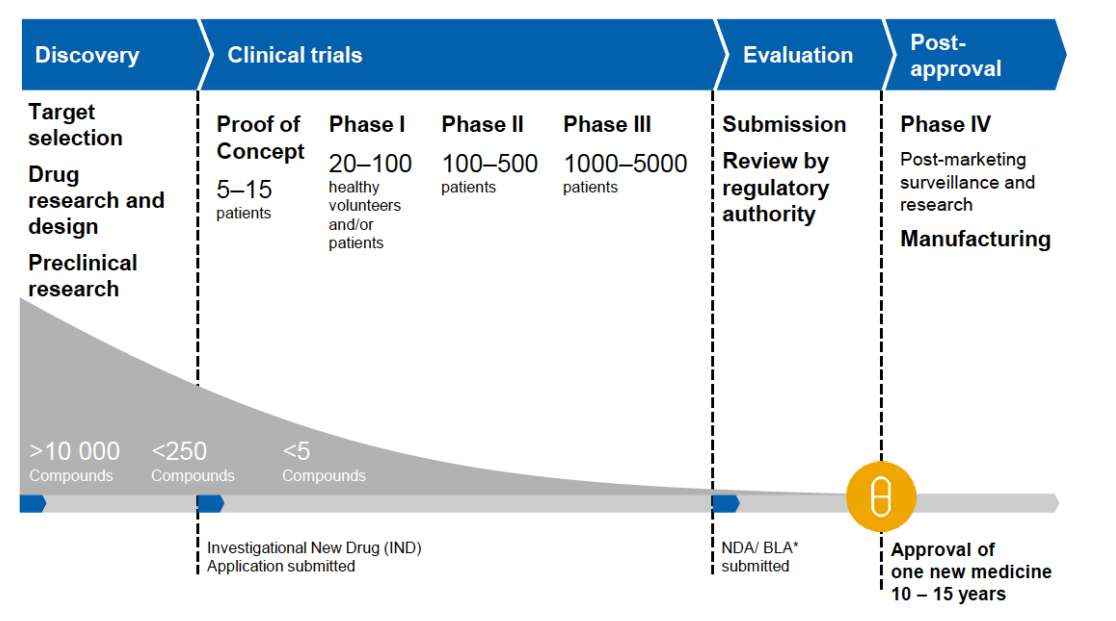
    • Investigational exemption to run trials - IND (drug / biologic), IDE (device)
    • Prescription drug - NDA (new drug application), ANDA (new generic)
      • For new indication - sNDA or 505(b)(2)
      • For non-prescription - OTC (over-the-counter) or “Rx-to-OTC” switch
    • Biologics / Biosimilars - BLA (therapeutic biologic application)
    • Class II / III devices - 510(k) (substantially equivalent) or PMA (Pre-Market Approval)

Drug Discovery and Development

History up to 1962
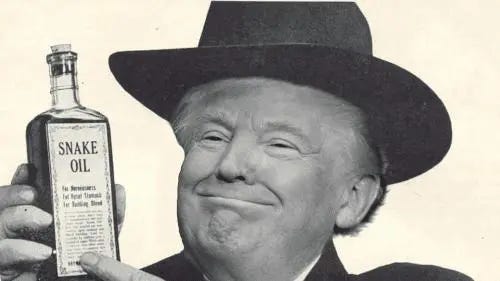
Biologics Control Act

Ensure purity and safety of serums, vaccines and similar products

Pure Food and Drugs Act

Prohibits sale of misbranded (strength, purity) and adulterated foods, drinks, and drugs

US vs Johnson

Supreme Court says PF&D Act doesn’t cover false therapeutic claims

Sherley Amendment

Prohibits false therapeutic claims with intent to defraud

FDA created

Originally, the Food, Drug, and Insecticide Administration (1927)

Food, Drug, and Cosmetic (FD&C) Act

Replaces the PF&D Act and Sherley Amendment (after 5 years debate)

Manufacturer has to show a drug is safe before it can be marketed (NDA submission)

Durham-Humphrey Amendment

Certain drugs labeled as prescription-only with refill rules

Kefauver-Harris Drug Amendments

Have to show a drug is safe AND effective for intended use

Evidence must consist of adequate, well-controlled studies (IND submission)

Submissions have no data standards, loose document structure, and reams of paper

1970s

  • OTC safety and effectiveness rules - 1972
  • Biologics moved from NIH to FDA - 1972
  • Medical devices added to FD&C Act - 1976
  • Drug Efficacy Study Implementation (DESI) - starts 1968, 1st report 1973
    • Review efficacy for drugs approved from 1938-62 (based on safety only)
  • Still - no data standards, no document structure, all paper
  • SAS programming language - proprietary commercial
    • Software validation (mostly) handled for you

1980s
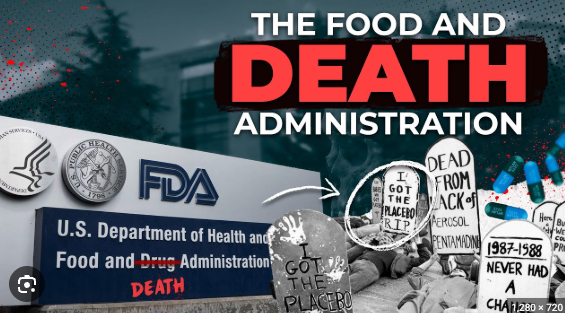
  • IRBs / Informed Consent rules - 1981
  • Current organization structure - 80s
    • Center for Drugs and Biologics created - 1982
    • CDRH is created - 1984
    • CDB split into CDER and CBER - 1987
    • Food and Drug Act - moves FDA to HHS - 1988
  • Orphan Drug Act, Anti-Tampering Act, Direct-to-Consumer Drug Ads - 1983
  • DESI final report - 2225 effective, 1051 not effective, 167 pending (3443 total) - 1984
  • Generics (ANDA submissions) - 1984
  • Access to investigational drugs / accelerated approvals - 1987+
  • FDA rules on format for a submission (12 sections) - still mostly paper
  • SAS XPT (v5) data file format created - 1989

1990s

  • Prescription Drug User Fee Act - 1992
  • Trials should include women - 1993
  • Post-marketing safety (MedWatch) - 1993
  • Food and Drug Modernization Act - 1997
  • Trials to analyze by age, gender, and race - Demographics Rule - 1998
  • FDA clinical trial registry - ClinicalTrials.gov - 1999
  • Submissions move from paper to electronic (PDFs and more)
  • Submissions include code, data (spreadsheets, databases) - PCs sent to FDA
  • SAS XPT (v5) is required for data - 1999
  • FDA is founding member of ICH (1990) and CDISC (2000) - STANDARDS-ish!

ICH - www.ich.org

  • The “United Nations” for regulatory agencies (RA)
    • Officially the “International Council for Harmonization of Technical Requirements for Pharmaceuticals for Human Use”
  • Guidelines
    • Identified with pattern <A><N> - with potential revisions (R<N>)
    • Q for Quality, S for Safety, E for Efficacy, M for Multi-Disciplinary
  • Each RA implements these as regulations
    • For FDA, this is Title 21 of the Code of Federal Regulations (CFR)
    • 21 CFR is all the regulations of the FDA, DEA, and ONDCP
    • Divided into chapters and sub-chapters (FDA is Chapter I, Subchapters A through L)
    • Divided into parts assigned to sub-chapters (FDA is parts 1-1299)
    • eg. Part 11 covers computer system / software validation
    • FDA provides a lot more documentation than just the 21 CFR regulations

ICH Guidelines (highlights)

Quality

Q7 Good Manufacturing Practice

Q8 Pharmaceutical Development

Q9 Quality Risk Mgmt

Q10 Pharmaceutical Quality System

Efficacy

E3 Clinical Study Reports

E6 Good Clinical Practice

E8 Trial Design

E9 Statistics for Clinical Trials

Multi-Disciplinary

M1 MedDRA Terminology

M2 Electronic Standards

M4 Common Technical Document (CTD)

M5 WHODrug Terminology

M8 Electronic CTD (eCTD)

M10 Bioanalytical Method Validation

M11 Clinical electronic Structured Harmonized Protocol (CeSHarP)

Safety

S1 Carcinogenicity

S4 Toxicity

S7 Pharmacology Studies

CTDs, eCTDs, and CSRs

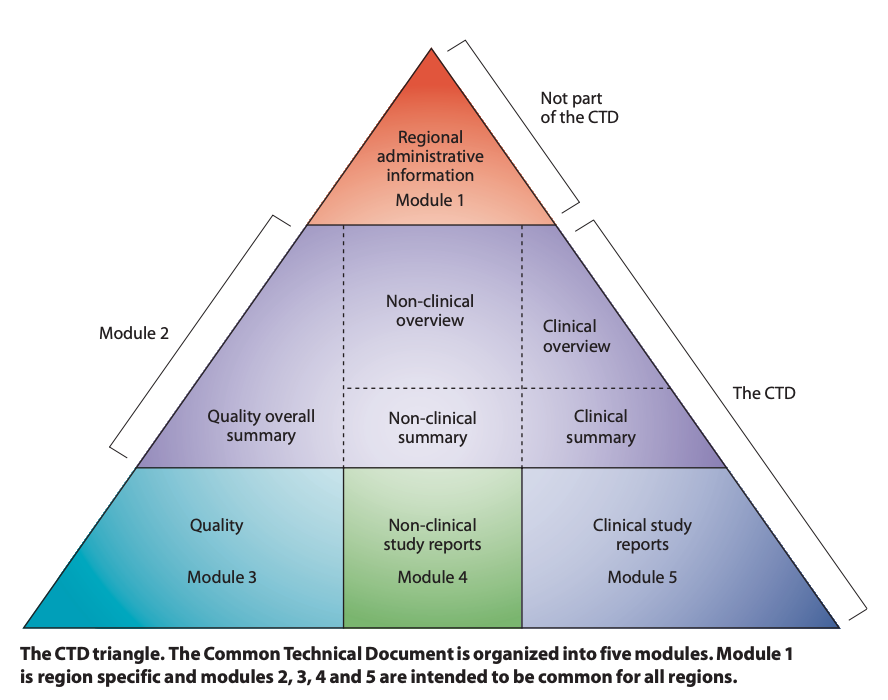
  • 5 Modules
    • M1 Administrative (RA-specific)
    • M2 Overviews and Summaries
    • M3 Quality
    • M4 Non-clinical study reports
    • M5 Clinical study reports
  • eCTD is a digital version of this (folder / file structure)
  • CSR is a clinical study report and is the contents of “m5”
    • Online books for how to do this in R and Python

CDISC - www.cdisc.org

  • Global non-profit setting data standards for clinical trials
  • Foundational standards are all XML-based
  • Most specifications are “guidelines” and come with implementation guides
    • Some guides are based on therapeutic area
  • Like ICH, also have their own controlled terminologies / biomedical concepts
  • Runs various initiatives - digital technologies, 360i (“AI”)
  • Runs COSA - CDISC Open-Source Alliance
  • Works with other standards organizations - FHIR, OHDSI
  • “Define” the main data standards to be included in the CSR
  • Different RAs have different rules on use of CDISC
  • Even for FDA - CDER, CBER, and CDRH have different rules

CDISC standards

  • USDM - Unified Study Definitions Model
  • CDASH (IG) - Clinical Data Acquisition Model
    • Model for capturing data from a Clinical Report Form (CRF)
  • SDTM (SENDIG - non-clinical, SDTMIG - clinical) - Study Data Tabulation Model
    • Model to organize and format data from trials
  • ADaM (IG) - Analysis Data Model
    • Model for analysis-ready datasets
  • Analysis Results Standard - Model (ARM) and Dataset (ARD)
    • Model (and meta-model) for statistical output from ADaM data
    • This can be input data for Tables, Listings, and Figures (TLFs)
  • Data flow
    • raw/CRF → EDC → SDTM dataADaM data → ARD → TLFs for PDFs
    • Metadata for all of this (traceability, quality) - common file is define.xml

The Shift to Open Source

SAS (closed) to Open Source

  • Most trials have a data flow - CRF → SDTM → ADaM → TLFs / PDF
  • Trial data (versioned / tagged) - based on CDISC, typically SAS data files (sas7bdat)
  • Trial code (versioned / tagged) - raw to SDTM to ADaM to TLFs is all SAS code
  • CSR files (in the eCTD) are SAS code and SAS XPT (v5) data files
  • FDA runs your SAS code on Windows (their environment)
  • R (v3 in 2015, v4 in 2020) and Python (v3 in 2008) can technically do this
    • Most folks are now learning R and Python
  • Can we move off of SAS?
    • Internal data can be anything - need versioning and tagging
    • 21 CFR Part 11 - need to validate core statistics and packages used
    • FDA needs to be able to run what we send (and code transfer is text-only)
    • SAS XPT (v5) is still required for data transfer - but we can make that with R / Python

R Consortium

  • The R Consortium does all things R
    • Projects - RLadies+, R-Universe, and DBI
    • Events - R/Medicine, UseR!, LatinR, etc.
    • Grants - Twice-annual grant submissions - Apr /Sep
    • Lots of working groups - many related to clinical trials
  • Submissions group runs pilots with FDA to prove this out
    • Started in 2021 - 7 pilots defined so far (5 are completed)
  • R Validation Hub a risk-based approach to R / package validation
    • Started in 2018

PHUSE

  • PHUSE - Global Healthcare Data Science Community
    • “Get-Stuff-Done” organization that works with CDISC
    • Funding from RAs and Pharmas - started 2004
    • Lots of working groups - everyone is involved
      • CAMIS - Comparing Analysis Method Implementations in Software
        • Part of Data Visualization and OS Tech working group
        • Prove out core stats in SAS, R, and Python
      • pharmaverse working group
        • Started as it’s own thing and then became a PHUSE working group
    • Main event is “Connect” (US, EU, APAC) and hackathons

{pharmaverse} and */Pharma

  • R packages - CSR data (SDTM/ADaM/ARS/TLFs), submissions, and validation
  • Community - slack, blog, examples, YouTube videos
  • Organized around 4 pillars - council members from pharma
    • OS Software Solutions, Community, PHUSE WG, Future Focus
  • R/Pharma is a related group for events and hosts
    • GenAI virtual conference (Jun)
    • In-person “Summit” day prior to posit::conf (Sep)
    • R/Pharma virtual conference (Oct)
    • R/Pharma Hangouts (monthly)
    • Diversity Alliance Hackathon
  • Open Source in Pharma is a non-profit with similar aim as R/Pharma for ALL languages

{pharmaverse} Packages

Where we at?

  • Submissions
    • Pilots - execute R, custom packages, {shiny} apps, {renv}, podman, WebAssembly, dataset-json
    • FDA regulatory changes on using .zip files for custom R packages
  • Validation
    • Packages to collect risk metrics, publish to repos, generate docs, R itself
    • Meta-packages to track issues and generate docs - {qcchat}
  • ICH / FDA / CDISC work
    • M11 and USDM, automation / “AI” / 360i, FDA “real-time” trials, dataset-json
  • Successes

Questions

The future of therapeutic development is open source

THANK YOU!!